What Happens to Your Bread When You Add Whole Grains?
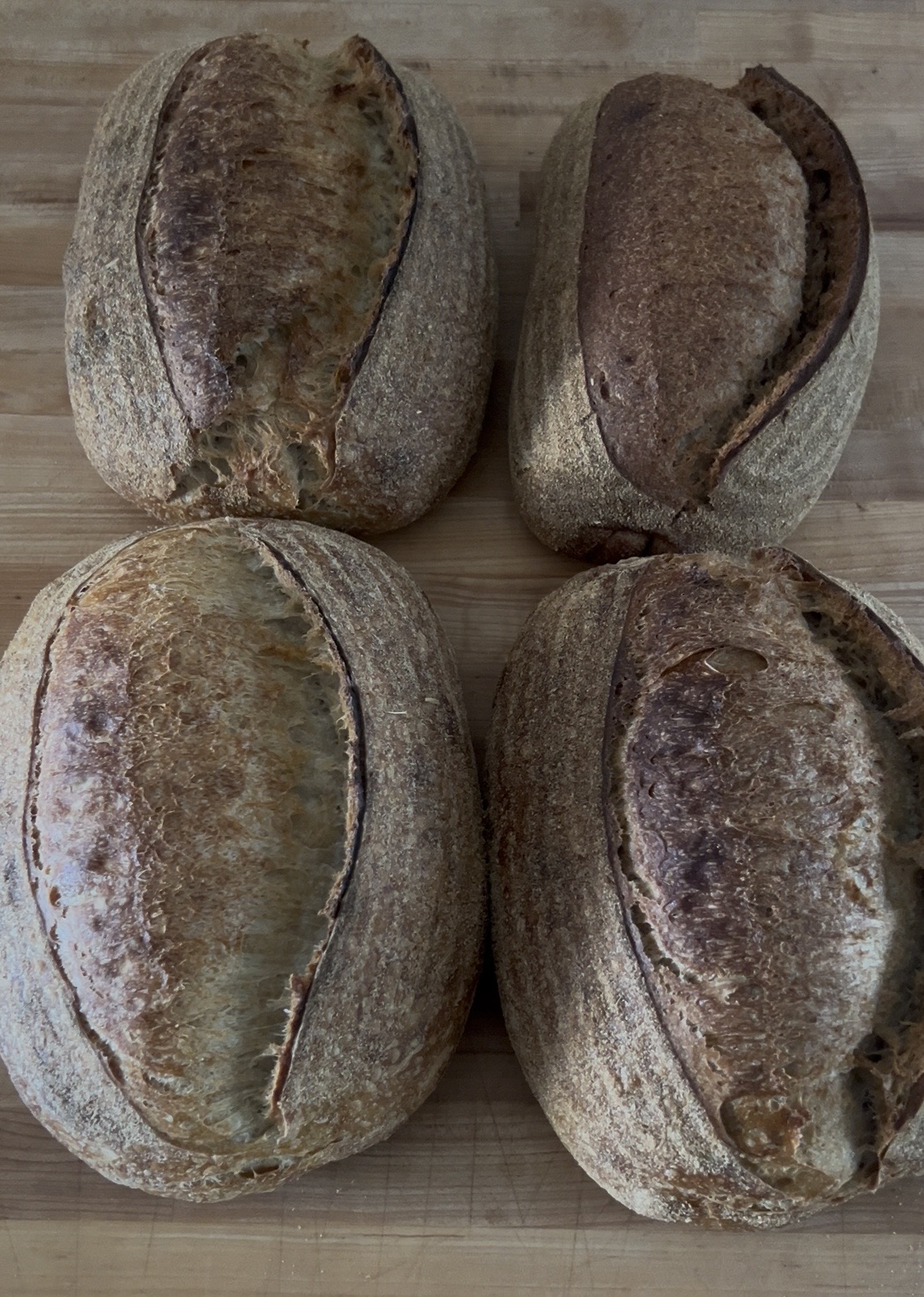
Hi My dear Early Risers!
Thank you for being here. I know it’s been quite a while since I posted. And I know I owe you new recipes, which I am working on! But lately I have really gone down the whole grain rabbit hole- after taking a class at Rise Baking Lab in Canada with Graison Gill. It was focused on whole grains and we talked a bit on the change in nutrients but I decided to do a deep dive on what actually happens when you add more whole grains to your bread…
Whether you come from a culture that values white and soft buns or dark and hearty ryes, most of us know that whole grains bring more nutrition and deeper flavor. But most bread you see at the grocery stores in the US, even ones labeled “whole grain” or “multigrain”, is really just a white loaf lightly mixed with whole grains. A loaf can legally carry that label with as little as a few grams of whole grain mixed in. That makes me mad!
During my last 5+ years of baking sourdough, I’ve tried to feed myself and my family as many whole grains as possible, and I got curious about the actual statistics. What happens when you only add 10% whole grains? And what happens at 30, 50, and then all the way up to 100%? Here’s what I found researching the wild open internet…
- * *
What We’re Working With
To keep this simple, I’m looking at a standard loaf made with unenriched white flour as the baseline. This is the kind of flour that’s had the bran and germ stripped away, leaving mostly starch. I’ve decided to research unenriched flours because if you’re going to go deep down the whole grain tunnel, then why buy enriched flour? You’re probably already buying organic, which generally only has added malt (which is a by-product of wheat, so I think it’s fine). Then I’m comparing what happens nutritionally when you replace 10%, 30%, 50%, and finally 100% of that white flour with whole wheat.
All values are based on a 100g serving of flour blend, just to keep the numbers simple and easier to understand. Also, to be totally clear, this is not a scientific article. I just read some blogs and compared charts I found online to gather this information. We have hardly any regulations on sifted (white) flour, so this is a generalization.
The point of this article is to show you that it is important to eat whole foods, and that white flour became a trend when we needed more shelf-stable food items at the grocery store. I also don’t want to demonize white flour. I understand that it’s much less expensive and way easier to find. I just want to show that if you can, adding whole grains is beneficial in so many ways. We now have access to so much more, and I hope reading this encourages you to seek out local mills or whole grains at the grocery store.
- * *
10% Whole Wheat: Small Swap, Bigger Shift Than You’d Expect
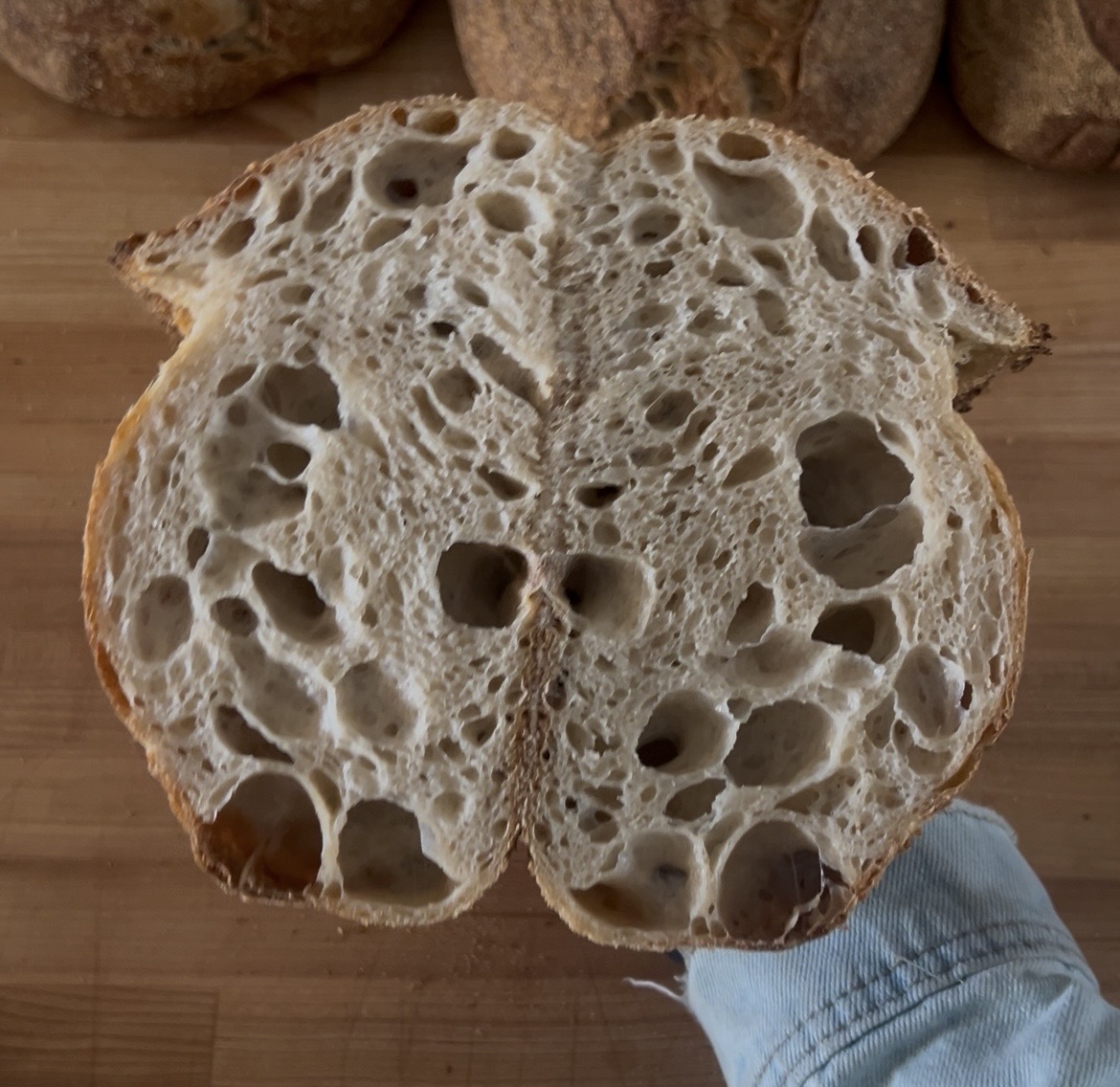
Ten percent sounds like almost nothing. And truly, most people won’t notice it in the taste or texture of their bread. But here’s what that small swap actually does to the nutrition:
Fiber jumps from 2.4g to 3.4g which is a 42% increase. For a nutrient that most Americans are chronically under-eating, that’s not nothing. It’s also, for me, a surprising source of fiber because I generally think of fiber as something I need to get through whole foods (which whole wheat really is!) like fruits and veggies. So getting extra fiber through my carbs is a win in my book!
Magnesium goes from 22mg to 33.5mg and that’s a 52% jump. Magnesium is involved in over 300 enzymatic reactions in the body, and most people don’t get enough. I feel like every time I go to my doctor complaining about little things like sleep or energy level, he tells me to take magnesium. So again, eating it naturally through carbs? Yes, please!
Vitamin B6 increases by more than 80%, and Vitamin E nearly doubles.
Manganese (a mineral important for bone health and metabolism) increases by about 50%. I can always use minerals that support my metabolism, especially as I inch towards menopause!
And Vitamin A, which is completely absent in unenriched white flour, starts showing up: about 22mcg per 100g. That last one is worth noting. A 10% swap takes a nutrient from zero to present. And not because of fortification or anything synthetic, but simply because whole wheat flour naturally contains it. This is what I keep coming back to when I think about nutrition for me and my family: how many supplements or outside added enrichments am I forced to add to my diet instead of eating whole foods that already have them? Nature is magic and we are a part of it, let’s try to eat as much naturally grown nutrients as we can!
- * *
30% Whole Wheat: Now We’re Talking
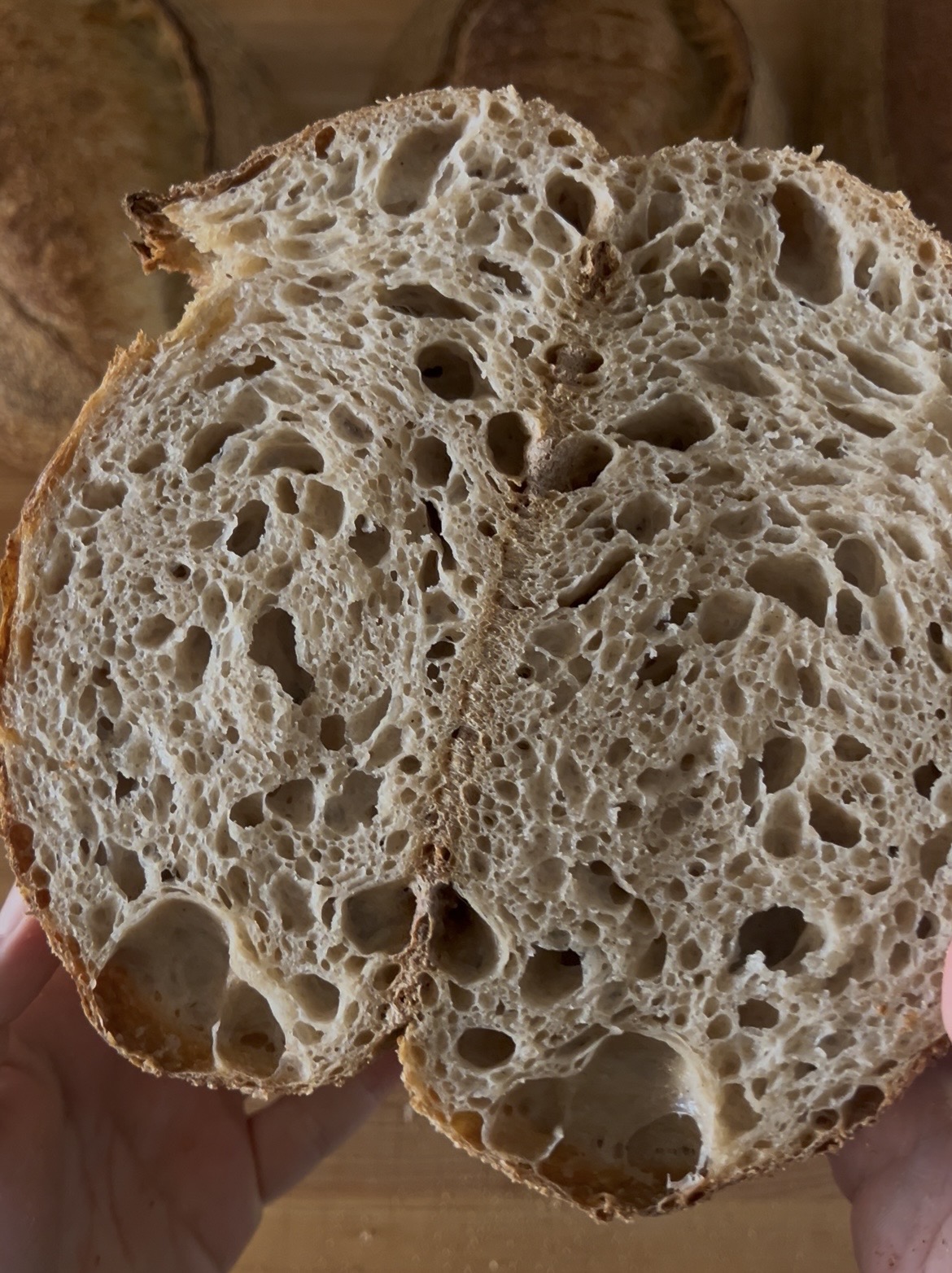
When we push that ratio to 30% the differences become hard to ignore, especially for the nutrients that matter most to long-term health. And believe me, you can make a light, airy, open-crumb loaf of bread with 30% whole grains. It’s not even that hard!
Fiber climbs to 5.4g per 100g, which is more than double the white flour baseline. Two slices of bread made with this blend would give you close to 4g of fiber, putting a real dent in your daily goal of 25–38g.
Magnesium reaches 57mg which is a 160% increase over plain white flour.
Manganese more than doubles, and Zinc, which is important for immunity, wound healing, and dozens of enzymatic processes, goes up by about 57%.
Vitamin A is now at 66mcg. Still not a huge amount, but again: this is up from zero.
Betaine, a compound linked to liver health and cardiovascular function that is completely absent in white flour, starts appearing in meaningful amounts.
Potassium increases by about 80%, Iron nearly doubles, and Vitamin B3 goes up by more than 100%.
- * *
50% Whole Wheat: Changes Everything
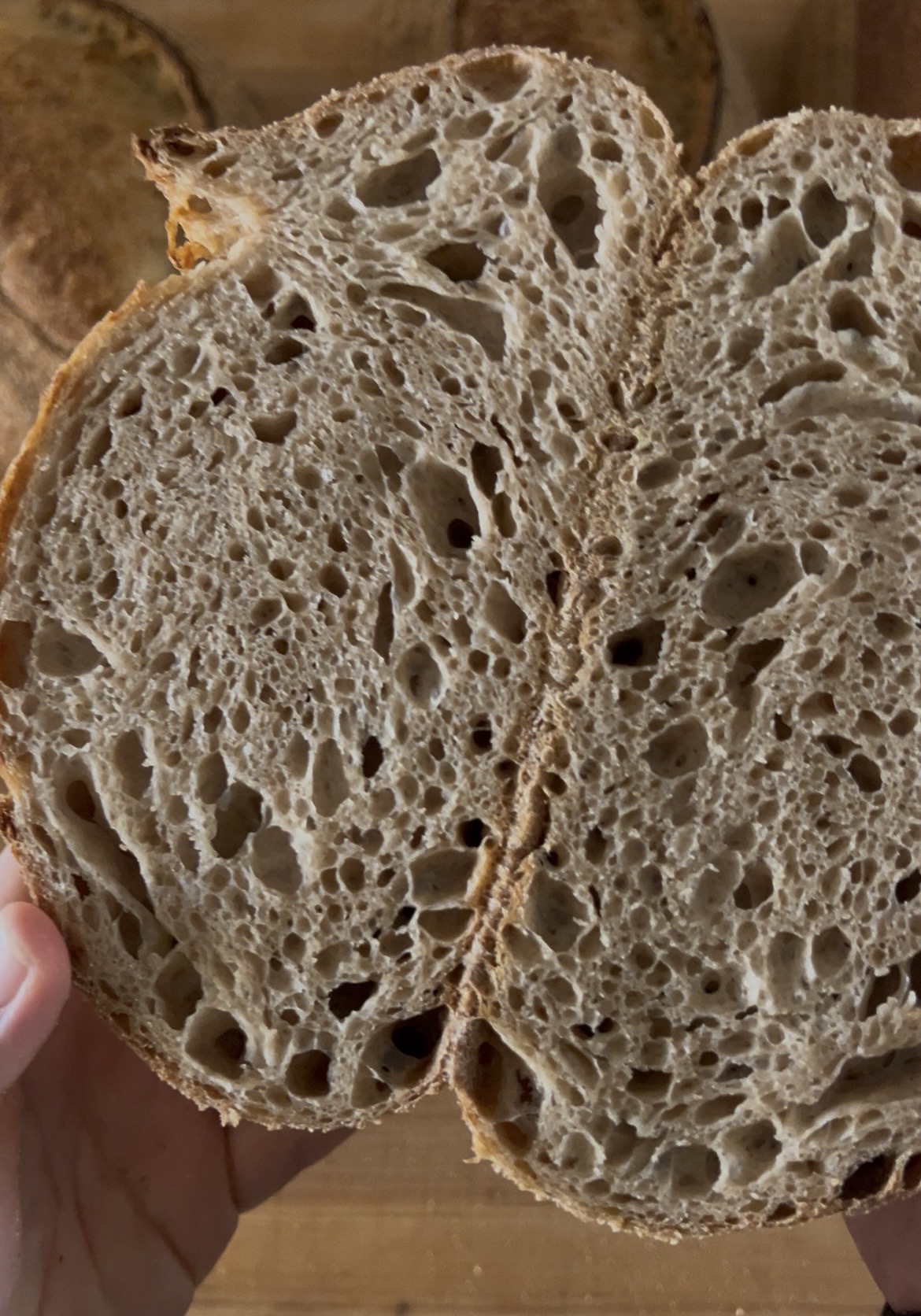
This is where the nutritional shift becomes dramatic. Interestingly, it’s also the threshold where most home bakers start to notice a difference in texture. The crumb gets denser, the crust chewier, the flavor more complex and nutty. Whether that’s a feature or a bug depends on who you ask. I find that when I speak with home bakers who generally use white flour, slowly increasing the whole wheat in their bread is the way to go. This is so their palates (and families) don’t stop actually enjoying the bread, and so the baker doesn’t get frustrated completely changing the way their dough behaves and their bakes turn out.
Here’s what’s happening nutritionally at the halfway mark:
Fiber hits 7.6g per 100g, which is more than three times the white flour baseline. Four slices of bread made with this blend get you close to 10g of fiber for the day before you’ve even thought about vegetables.
Magnesium reaches 79.5mg, closing in on 20% of the recommended daily intake from bread alone.
Potassium jumps to 231.5mg which is more than double the white flour amount. Most people are chronically low on potassium, and it rarely gets the attention it deserves.
Vitamin A is now at 110mcg, Betaine is at 36.4mg, and Manganese is at 2.34mg. More than 100% of the daily recommended intake for that mineral. (WOW.)
Zinc reaches 1.65mg, Iron 2.39mg, and Vitamin B6 0.222mg. These aren’t trace amounts anymore. At 50%, whole wheat flour is doing real nutritional work.
The flavor trade-off is real but manageable. Many people find 50% whole wheat to be the sweet spot, at least for me it is! I make 50% whole wheat with a whole wheat starter as our regular “country loaf” bread at home. It has enough whole grain character to feel intentional, but not so much that it alienates people who grew up on sandwich bread. It’s also smart to experiment with different ingredients that can help tamp down the tannic flavor whole grains can add: some oil or butter, inclusions, or a bit of honey goes a long way.
- * *
At 100% Whole Wheat: The Full Picture
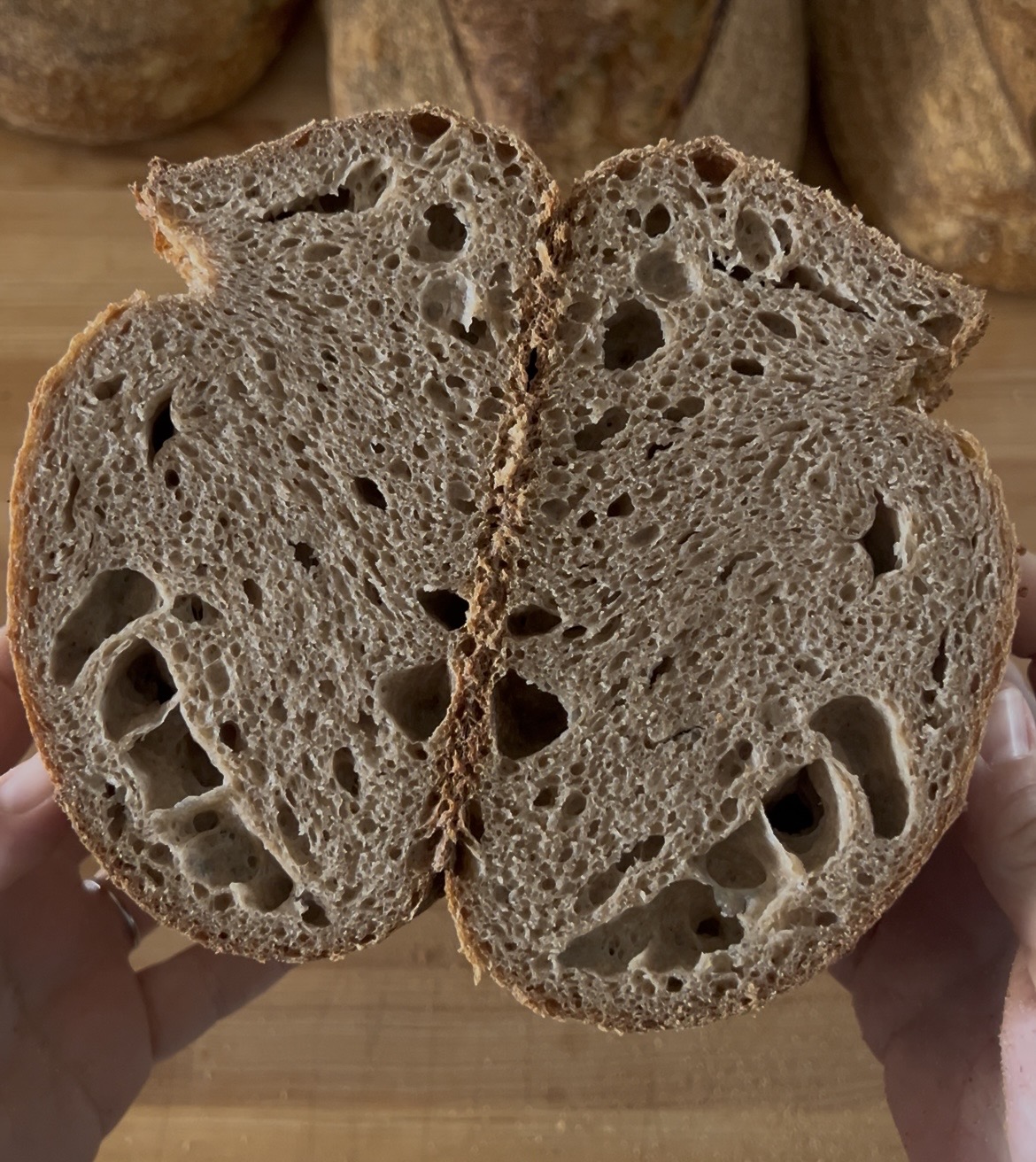
This is where the numbers become almost hard to believe, especially when you compare them to where we started with plain white flour.
Fiber: 12.8g per 100g. That’s more than half of the low end of the recommended daily intake, from flour alone.
Magnesium: 137mg which is more than 30% of the daily recommended value. In a world where magnesium deficiency is linked to poor sleep, muscle cramps, anxiety, and elevated blood pressure, this matters.
Potassium: 363mg (versus 100mg in white flour). Manganese: 4mg, which exceeds the daily recommended intake. Zinc: 2.6mg, nearly four times what white flour provides.
Vitamin A: 220mcg, compared to completely absent in white flour. Betaine: 72.8mg, also completely absent in white flour. Vitamin E: 0.71mg versus 0.06mg. Vitamin K: 1.9mcg versus 0.3mcg.
Every single nutrient is higher. Some by a little (protein goes from 10.3g to 15g), some by a staggering amount (Vitamin B6 goes from 0.044mg to 0.4mg — nearly a 10x increase).
The real caveat here is texture. A 100% whole wheat loaf made with standard whole wheat flour is going to be denser and more assertive than what most people are used to. That’s not a dealbreaker, but it is a preference. It is dramatically different than a white loaf of bread. But, I find that plenty of people love it, especially toasted with good butter. But it’s worth knowing what you’re signing up for.
The point of this article isn’t to convince you to move from 100% white flour straight to 100% whole grains. It’s just to show you the impact it can have at various stages. Finding the sweet spot for you and the people eating your bread is what I’m hoping to help with here. And it’s definitely a learning curve. If you’re used to eating and baking white loaves, it’ll take some practice and patience with yourself before you really nail it, and that’s okay! I have my intermediate country loaf recipe here, and that uses 25% whole wheat flour. It also has 77 5 Star reviews… Try that!
- * *
Why This Matters More Than It Sounds
Obviously, bread isn’t the only thing you eat. But it might be one of the things you eat most consistently. If you have two slices of toast in the morning and a sandwich at lunch, that’s four slices. Depending on what that bread is made with, it can either weigh you down and spike your blood sugar, or be a meaningful nutrient boost to your day.
The difference between a 100% white flour loaf and even a 30% whole wheat loaf isn’t dramatic in any single nutrient. But when you’re talking about fiber, magnesium, and B vitamins, which are nutrients where widespread deficiency is common and consequences are real, consistency matters more than intensity. You eat bread almost every day. That daily repetition is exactly where small nutritional differences compound into something significant over months and years. And we know how important healthy habits are, especially in this overly processed world!
It’s like adding nutrients to what you crave. Like eating some peas and ham with your mac and cheese to make it a complete meal. You still got the mac and cheese, but you also ate veggies and protein. You don’t have to make a dramatic leap to get meaningful benefits. Every 10% matters.
Going from 0% to 10% whole wheat is not a small change. It’s the difference between zero Vitamin A and some Vitamin A, between 2.4g of fiber and 3.4g. And each step up the ladder adds more.
- * *
The Enrichment Caveat
Most white flour sold in the US has had some nutrients added back in synthetically — this is called enrichment. So a loaf made with enriched white flour will have more folate, iron, and some B vitamins than what I’ve described above. But enrichment doesn’t restore everything that’s lost in milling. Fiber, magnesium, potassium, Vitamin A, Vitamin E, betaine, zinc, all of those don’t come back.
Enrichment replaces a few things; whole grain keeps them there in the first place. Intuitively, it also feels off to me to add back “enrichments” when the grain already contained them naturally. Someone grew this miraculous plant with these nutrients built right in, and now we strip them out and add them back IN? Weird. I’d rather just use more whole grain flour, wouldn’t you?
- * *
The Takeaway
There’s no single right answer here. The best whole grain ratio is the one you’ll actually stick with. Don’t leave this article and tell yourself you’re only baking 100% whole wheat loaves from now on. Do some experimentation, find the ratios that you like to work with and that you like to eat, and go from there!
In my experience, the whole wheat road turns into obsession. Once you start, you will begin to enjoy eating and baking with whole grains more and more. Kind of like starting to bake, once the bug gets you… it doesn’t usually let up!
If you’re just starting out, 10% is a painless entry point. Your bread will taste very similar and you’ll already be getting meaningfully more fiber, magnesium, and vitamins than you were before. At 30%, the benefits compound and the texture is still totally approachable. At 50%, you’re getting serious nutritional value and a bread that has real character, but fermentation times and the way you mix will need tweaking. And at 100%, you’re getting it all, every nutrient whole wheat has to offer, with a texture that rewards good technique and an open mind. But this is advanced baking, and from the video I shared, you can see that I’m still working on nailing it. Be kind to yourself; maybe you’ll need to turn some loaves into croutons! I know I do.
Small changes, made consistently, add up. Feel free to ask questions here and I will do my best to help you along your way to baking with more whole grains! We didn’t even crack the surface of whole grains, this was all focused on Wheat, but when you start to explore this world, you will be blown away by the types of grains out there and the flavor and nutrition they bring.
Thank you for reading and being here,
Laila
- * *
All nutritional data based on USDA FoodData Central values for whole wheat flour and unenriched white flour. Values calculated by prorating each nutrient by the flour blend ratio. Bread nutrition will vary based on recipe, hydration, and other ingredients.