Using More or Less Starter in Your Bread
How to adjust the flour + water (and what it does to fermentation)
If you want to use more or less starter than your recipe calls for, the easiest method (if you don’t want to wing it!) is to:
- Break your starter into equal parts flour and water. (Assuming a 100% hydration starter.)
- Add up the total flour and total water in your original recipe.
- Replace the starter with your new amount and rebalance the flour/water.
- * *
Example 1: Using less starter
Original recipe
- 80 g starter
- 400 g flour
- 300 g water
- 8 g salt
Step 1: Break down the starter
80 g starter = 40 g flour + 40 g water
Step 2: Add to the recipe totals
- Total flour: 400 + 40 = 440 g
- Total water: 300 + 40 = 340 g
- Salt stays the same
- * *
New recipe using 35 g starter
Step 3: Break down the new starter
35 g starter = 17.5 g flour + 17.5 g water
New totals
- Flour: 400 + 17.5 = 417.5 g
- Water: 300 + 17.5 = 317.5 g
- Salt: 8 g
Step 4: Compare totals to the original
Original flour total: 440 g New flour total: 417.5 g Difference: 22.5 g (≈23 g)
Original water total: 340 g New water total: 317.5 g Difference: 22.5 g (≈23 g)
Final adjusted recipe
- 35 g starter
- 400 + 23 = 423 g flour
- 300 + 23 = 323 g water
- 8 g salt
- * *
How does this affect fermentation?
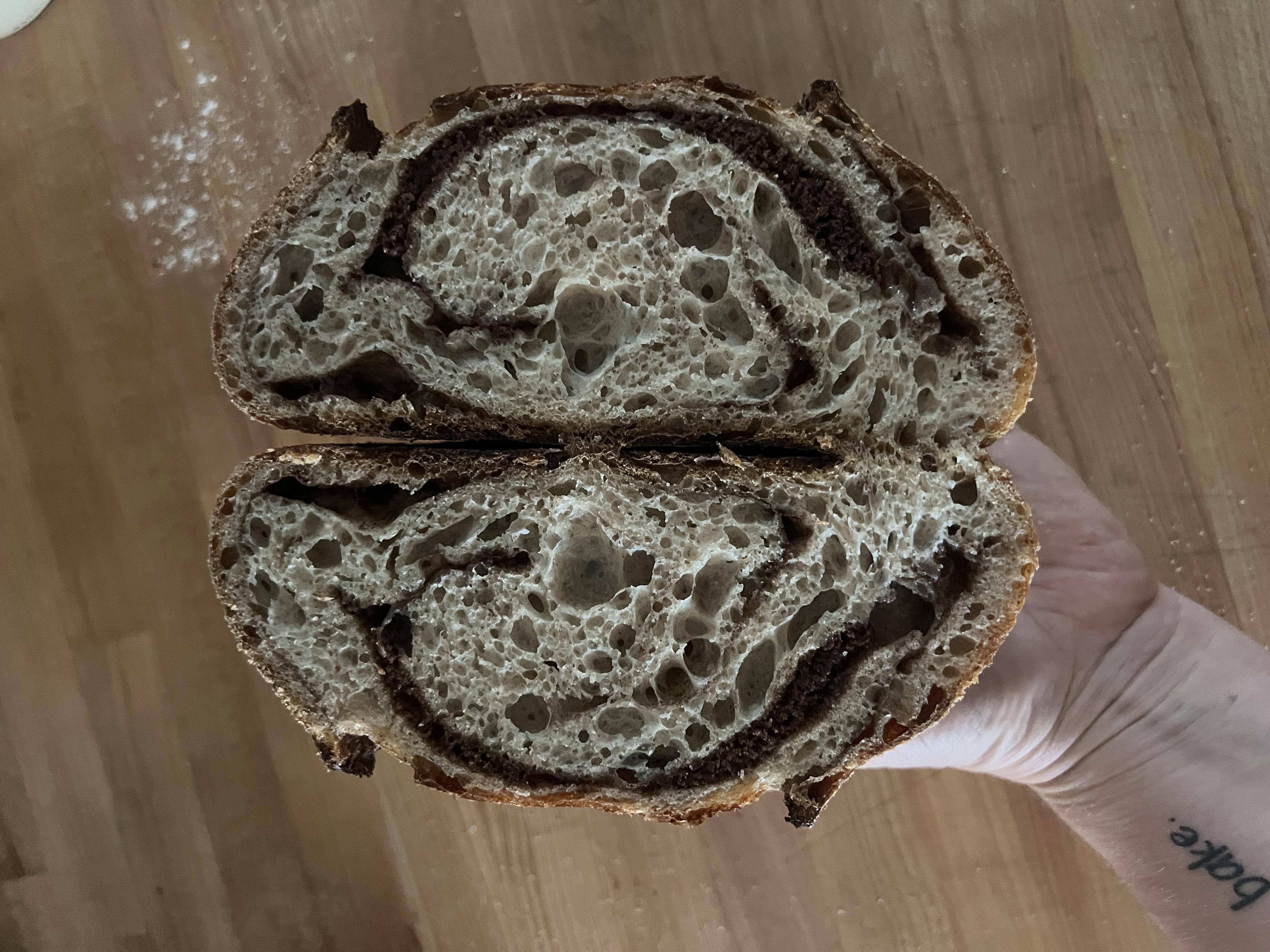
- More starter = faster fermentation
- Less starter = slower fermentation
- Temperature compounds this (warm = faster, cool = slower)
If you reduce the starter and don’t want a long fermentation, use warm water. If you do want a long bulk (e.g., overnight), cool water is fine.
- * *
Example 2: Using more starter
Original recipe totals (same as above)
- 440 g flour
- 340 g water
- 8 g salt
New recipe using 120 g starter
Break down the starter: 120 g starter = 60 g flour + 60 g water
Compare to the original: Original starter flour: 40 g New starter flour: 60 g Difference: +20 g flour
Original starter water: 40 g New starter water: 60 g Difference: +20 g water
That means you remove 20 g flour and 20 g water from the base recipe to keep totals the same.
Corrected new recipe
- 120 g starter
- 400 − 20 = 380 g flour
- 300 − 20 = 280 g water
- 8 g salt
This recipe will ferment faster, because you’ve increased the inoculation (the % of starter).
- * *
Baker’s Percentages (Quick + Useful Breakdown)
Baker’s percentages are a simple way to compare recipes
(no matter how much starter you use) because all ingredients are expressed as a % of the flour.
1. Flour is always 100%
Everything else is a percentage relative to the total flour.
2. For a 100% hydration starter
- Half the starter is flour
- Half is water So you can break it down easily when calculating percentages.
- * *
Example: Your Base Recipe in Baker’s %
Base recipe:
- 80 g starter
- 400 g flour
- 300 g water
- 8 g salt
Break down the starter:
- 40 g flour
- 40 g water
Total flour = 440 g Total water = 340 g
Now calculate the percentages:
- Flour: 100% (always!)
- Water (hydration): 340 ÷ 440 = 77% hydration
- Salt: 8 ÷ 440 ≈ 1.8%
- Starter: 80 ÷ 440 ≈ 18% inoculation
So your base dough is: 77% hydration, 1.8% salt, 18% starter.
- * *
Why this matters
When you increase or decrease starter, what you’re really doing is changing the inoculation percentage.
- Higher % starter = faster fermentation
- Lower % starter = slower fermentation
If you keep the flour + water totals the same, your hydration stays the same, so the dough feels familiar even with different fermentation speeds.
- * *
Quick Formula to help you calculate!
Baker’s % = (ingredient weight ÷ total flour weight) × 100
I hope all of this information helps you rather than confuses you more. My base country loaf recipe is linked here! Happy baking, Early Risers!