Should I keep my starter in the fridge or on the counter?
Hi Early Risers!
I hope your new year is starting off great. I have been seeing so much confusing information on reels and social media posts recently and I want to help you clear up any confusion you may have around your sourdough starter. First off, you do not have to stick to anything that I am about to write. Just because you feed your starter a certain flour or ratio doesn’t mean it has to be that way forever. As long as there is SOME activity and no mold, your starter is alive and can be revived and balanced. Here are some comparisons between fridge starters and counter starters:
Fridge starters:
- Fed infrequently (I urge you to still feed it once a week)
- Slow fermentation (due to low temperature)
- Bacteria heavy, light on yeast
- lower maintenance
- less flour use
- great for people who bake infrequently
- can go days without attention
- takes MORE time to wake up for baking
- very forgiving if you forget a feed
- acidic and smells like acetone
- more finicky, hard to push bulk fermentation to the max, lots of bacteria present means a more fragile dough
Counter starters:
-
Must be fed 1-2 times a day (depending on ratio and temperature)
-
Fast fermentation
-
Strong yeast population
-
more flour use (but use my tiny starter method- feed 2-3 grams starter 10 grams water and 15 grams flour once a day and keep it in a cool spot. If you’re extra you can keep it at 75 and do this twice a day, discarding the extra to make discard pancakes once a week with)
-
great for avid bakers who bake a lot
-
ready to go at any time, no need to “wake it up”
-
well balanced and smells good, will likely more than double at each feeding
-
easier to bake with because it is stronger and more resilient due to balance- more yeast to make it rise!
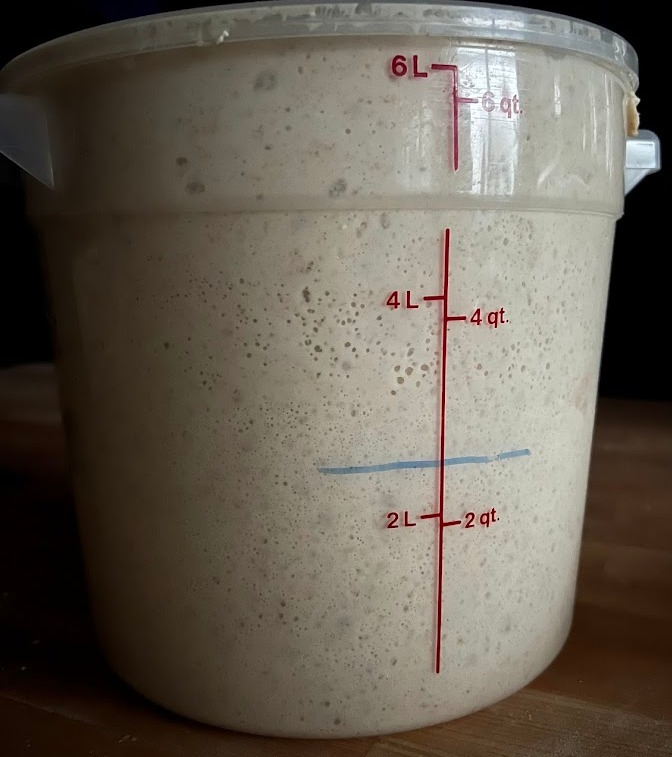
It all boils down to what works for you. If you try to go crazy and maintain a counter starter but you find yourself always forgetting about it and it’s always going acidic, then there isn’t really a point to it. Bread baking is FUN and should fill your cup. If keeping your starter on the counter adds stress, don’t do it!
BACTERIA!!
Lactic Acid Bacteria is what makes sourdough starter what it is. Let me tell you more about it. LAB generally falls into these camps:
1. Homofermentative LAB
- Produce mostly lactic acid
- Create a mild, yogurty, rounded sour
- Tend to dominate in warmer, well-fed, higher-hydration environments
- Counter or room temp starter will have more of this.
2. Heterofermentative LAB
- Produce lactic acid + acetic acid + CO₂
- Responsible for sharper, vinegary notes
- Become more prominent under stress: cooler temps, low hydration, infrequent feeding, or long fermentation
- **Fridge starters**
Warmer temperatures (counter) generally favor lactic acid production, not acetic, when food is plentiful. This is when starters smell creamy, milky, or lightly tangy.
- Acetic acid increases when LAB are stressed. That stress often comes from cold storage, low hydration, or starvation (starter left too long between feeds), even if the starter is warm.
- This is the reason people ask me “my dough gets soupy and stringy so soon after folds, why?”
- It’s because you have stressed the LAB too much AND don’t have a strong enough yeast presence in your starter. It’s been under fed, or kept in the fridge too long, or out on the counter with only a small feed. There is too much bacteria, and not enough yeast. Before it can truly ferment, it starts to break down.
- This is the reason people ask me “my dough gets soupy and stringy so soon after folds, why?”
- A warm starter that hasn’t been fed enough can still skew acetic because the LAB shift metabolism once sugars are depleted. That’s when you get sharp sour, solvent-like, or nail-polish-adjacent smells.
Smell + Taste (yes, you can taste your starter!)
- Lactic acid dominance → yogurt, cream, mild tang, softer sour
- Acetic acid presence → vinegar, sharp bite, lingering sour, sometimes harsh aroma (usually from the fridge!)
So, what is the takeaway? Warm, well-fed starters that get access to sugars (the flour) are balanced, happy and taste good. Cold, under fed starters start to build up acetic acid, which is sluggish, nail polish smelling and sad. Please let me know if this article helped you! Thanks for being here, Early Risers!
Laila