Scoring, how much does it really matter? Can I do it wrong?
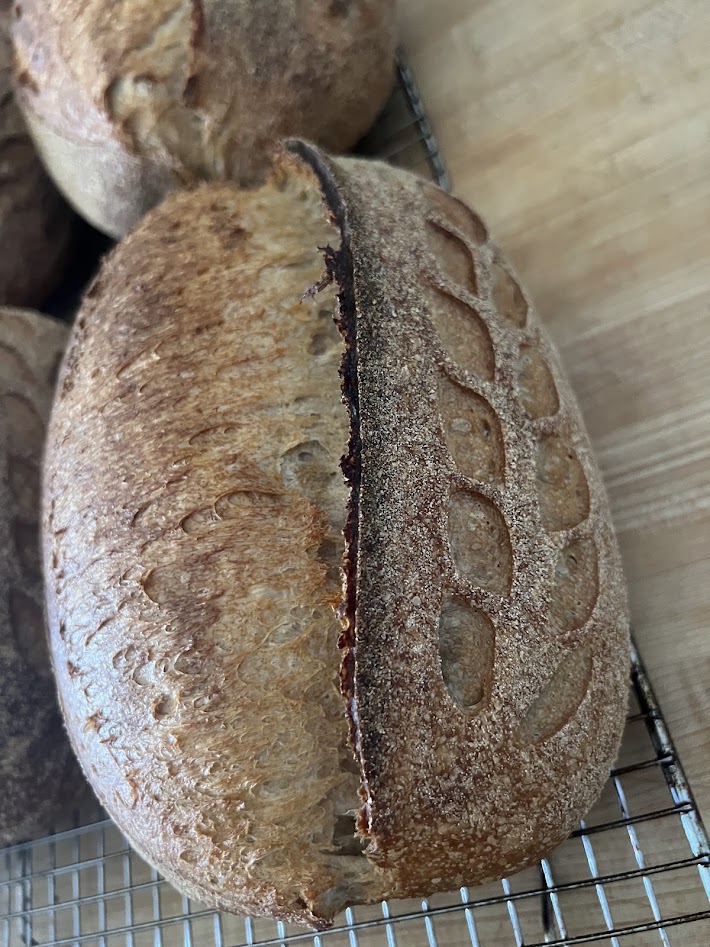
Scoring is a funny thing. It matters so much but it’s also a point in the bread baking process where mistakes still produce a gorgeous loaf of bread. If you don’t have a razor blade, or the blade snags when you score the loaf, you may not get a perfect ear. You might get an uneven looking loaf of bread, snagged spots or a raggedy ear. But, if you nailed the other aspects of the bake, the crust and crumb will be spot on. The scoring may mess up the aesthetics, but the rest of the bake can still go well. Like I showed you in the Instagram video, two completely different scoring patterns didn’t change the outcome of the final loaf THAT much.
Here are the tips I have for you when things don’t go right, where the scoring can help.
- Underfermented: While there are better ways to help an under proofed or fermented loaf (hint: leave it out on the counter before you bake it!), scoring deeply can help. It can help more gas escape, hopefully reducing the difference between the dense spots and the huge open holes. These two things indicate the loaf is under.
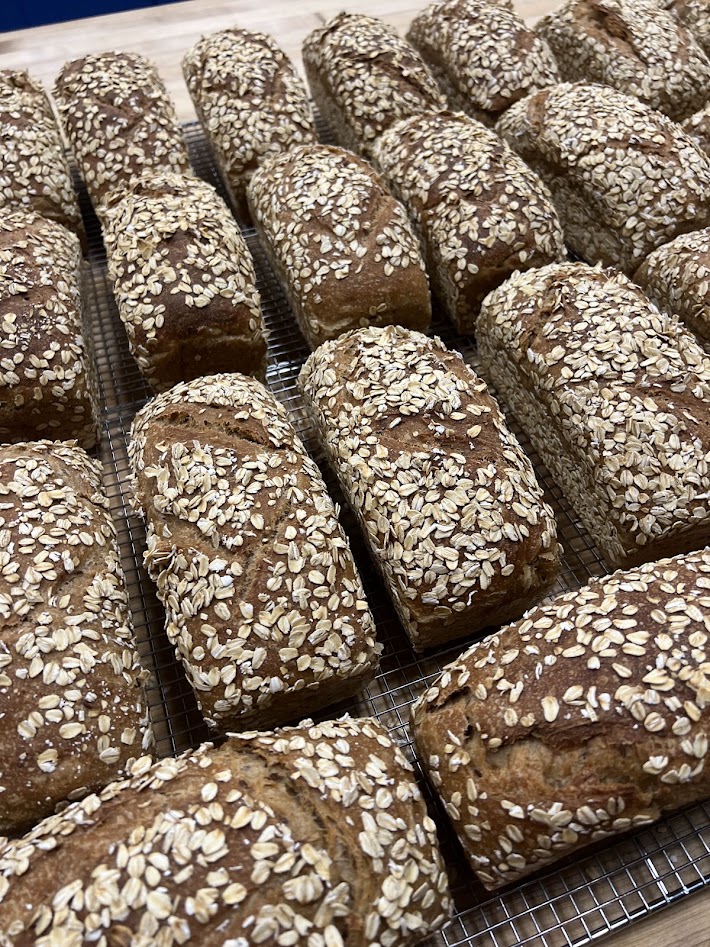
- Overfermented: The opposite of above. Score really lightly, maybe even just a wheatstalk. If the dough feels REALLY loose and like it’s quickly losing air, you might even skip scoring it. This is not the moment for decorative scoring. (See the sandwich loaf I scored diagonally several times below.)
- Inclusions: if they are hard to score, just take your time and try to slash through them, but don’t hack at the dough. As long as the surface is open, it should be enough.
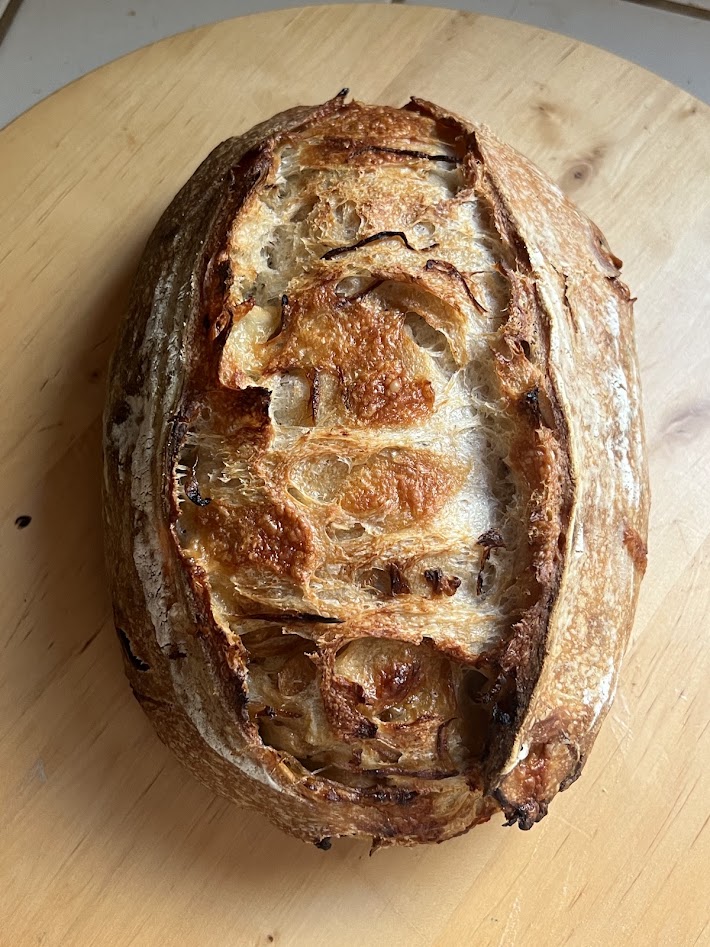
Click here to make this French Onion Loaf!
And here are some additional thoughts and tips on scoring:
- Artisan/Hearth loaf: You can choose however you want to score your bread! It doesn’t have to be just one slash. But if you want to do one large expansion score, put your blade at an angle and go from the top (not the bottom end where the dough touches the bottom surface, just from the top of the dough). Angle the blade and try to not over think it. It takes practice. If you don’t want an ear, it can help to not angle the blade.
- Decorative scoring: Best done on dough that isn’t very hydrated. You need the dough to be firm enough to keep its shape during the longer scoring process. Change blades more often, and do the decorative scoring before the expansion scoring. Do not use ice cubes in the Dutch oven or the scoring will steam off.
- One wheatstalk scoring: Only score the leafy, berry outer part of the wheat, not the actual “stalk” middle part. The vertical line that runs down the bottom shouldn’t be scored for that classic look, though of course you can do what you prefer for your loaves.
- Sandwich bread: It can be hard to keep your sandwich loaves from tearing when they bake, even when you push fermentation to the extreme. I sometimes score mine, just so I avoid the ripped look. I’ve talked with many experienced bakers on this, and it seems to be something that just happens to everyone and not necessarily indicative of any mistakes on the baker’s end. Check out the pictures here to see what I mean:
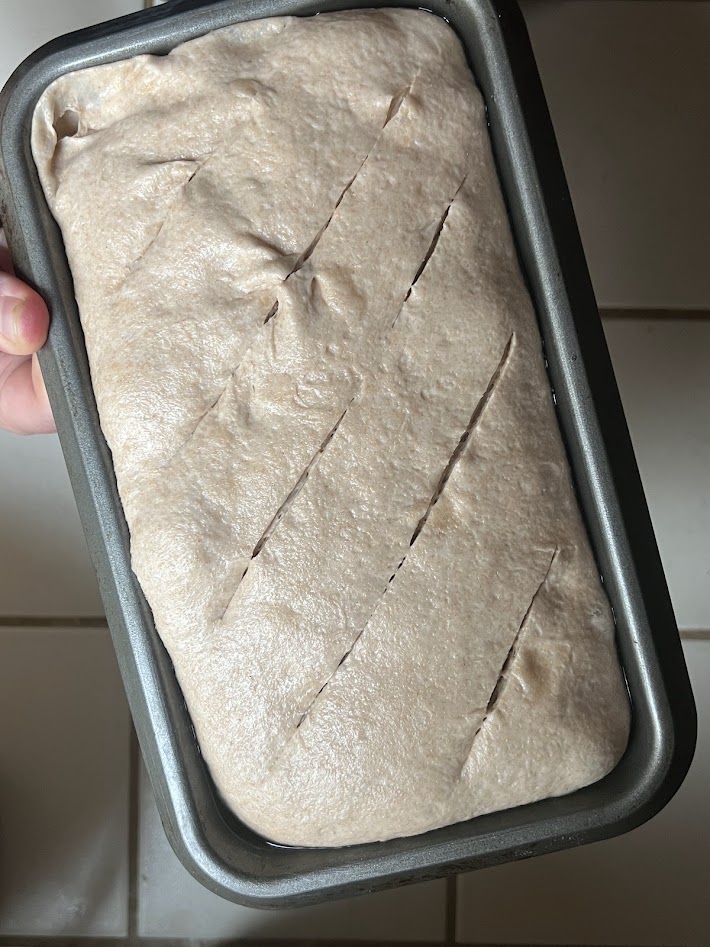
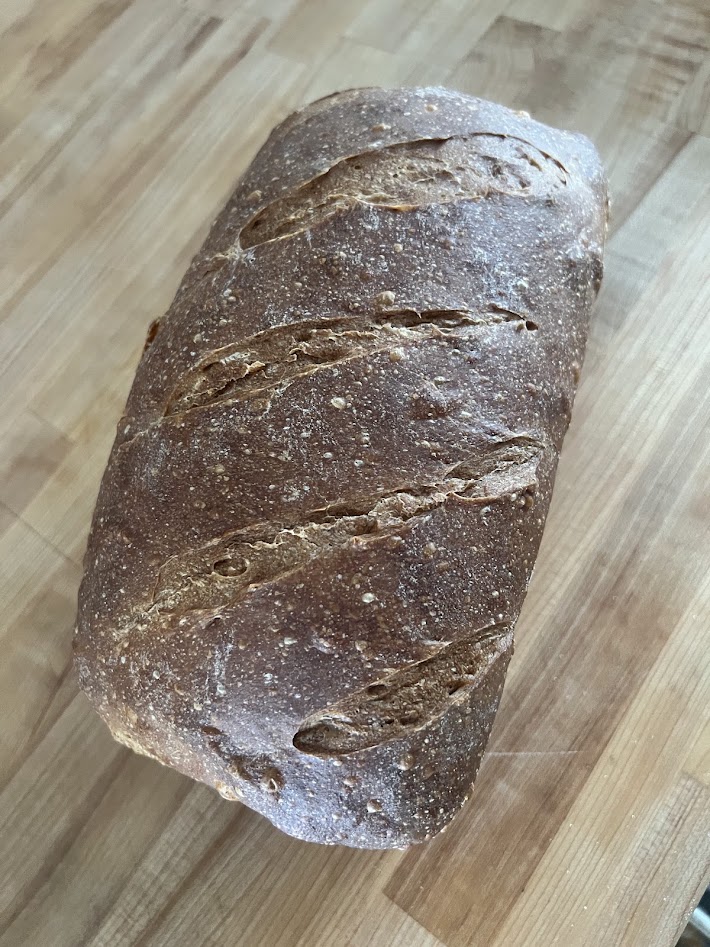
- The delayed scoring: Sometimes called the 6 or 7 minute score, this is when you put the bread in the oven with either no scoring at all, or with decorative scoring but no expansion score. I only suggest using this method when using decorative scoring, so you can control the spot where the loaf bursts. I don’t like this for any traditional scoring, as the first 15-18 minutes of baking is where steam matters most, and taking the Dutch oven out of the oven to score the loaf will keep your bread from expanding as much as it can.
- Cold dough vs room temperature dough: It is much easier, especially as a beginner, to score cold dough. If you like to bake ambient sourdough, which means you skip the fridge, and you have trouble scoring it, try putting the dough in the freezer or fridge for 20-40 minutes while your baking vessel preheats.
Please feel free dm me to follow up and ask any questions you have, I am working on getting a comment section going on my blogs, me and a friend of a friend are learning how to build a custom website and while he is the expert, I am asking a lot of him, so please be patient with me while I figure out how to add the comment section and to change the size of the pictures. For now, you can comment on the reel that I posted on scoring and let me know any thoughts or questions you have. Thanks for being here, I hope these tips work for you! And remember, I have so many resources right here on this website: recipes, a starter calculator, a glossary of terms, and all of my blog posts.
Happy Baking!
Laila