Rise Baking Lab Day 1
Hi Sweet Early Risers,
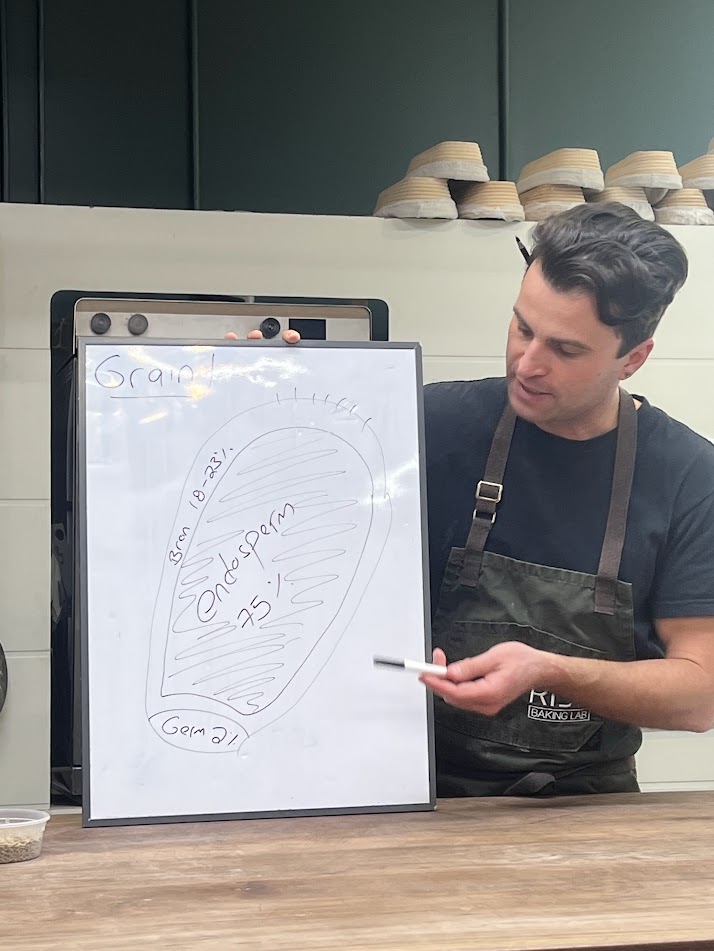
“White flour is a product. Whole grain flour is an ingredient.”-Graison Gill
I am sitting at a coffee shop in Chilliwack, Canada, writing you. This will be quick, as I have day 2 of class starting in 45 minutes. Here are the highlights of what I learned yesterday:
-
BASSINAGE! I always knew to do this. It’s a technique where you hold back a good portion of the final water amount and add it later in the process. However, I gained clarity on how to do it yesterday. First off, I learned it’s best to fully develop the gluten during the first mix when you have less water in the dough. Let it rest, then add the starter, salt and additional water. You do not need to wait until the starter/salt is totally incorporated and it doesn’t need a rest. Simply drizzle in the remaining water. In our class, we mixed the dough to 70% hydration and then added an additional 20%. Graison taught me that the water just needs to get mixed in and then you can stop mixing, you’re not trying to continue developing the dough at this point. That was huge for me, because at this point, I think I was waiting way too long, mixing the dough not long enough initially and then mixing it too long once I added all the ingredients in.
-
If you like to do an autolyse, which is where you mix the water and flour first and let it rest before adding all the rest of the ingredients, shorten it when using predominantly whole grains.
-
Hard Spring wheats are generally the “strongest” of the grains. So if you’ve started to dabble in whole grains and/or have access to a mill, Hard Spring wheats are the ones that will hold up best. That doesn’t mean they’re the best, it just means it might be an easier transition for you.
-
Graison likes to keep a 1/3 rye and 2/3 whole wheat starter at 80% hydration. He also emphasized several times that performing tasks like many folds, or preshaping, can not only take your time, but it’s also body work that may be unnecessary.
-
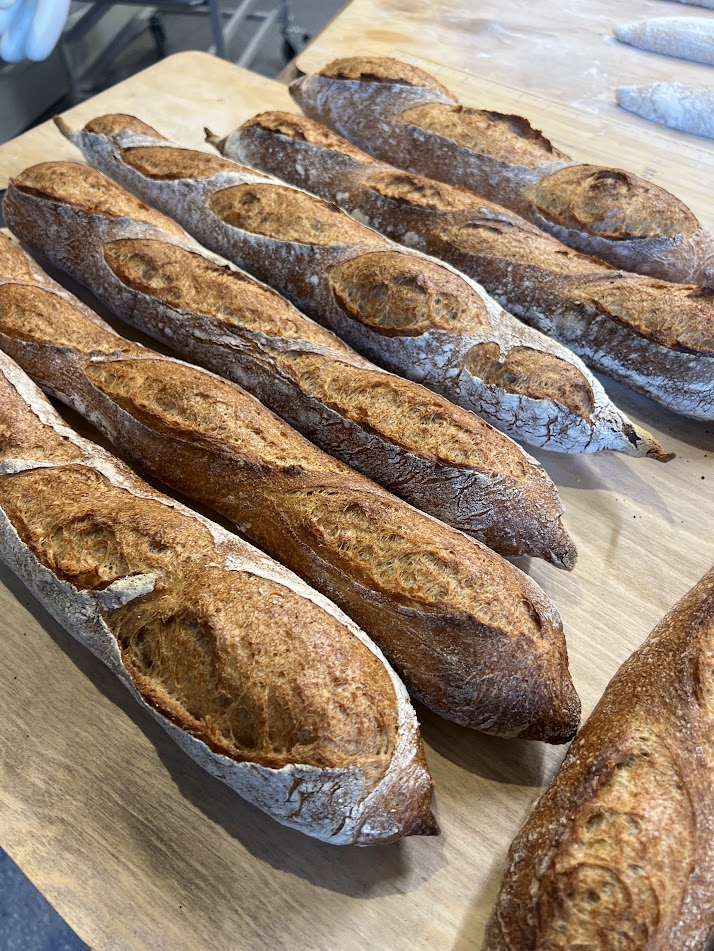
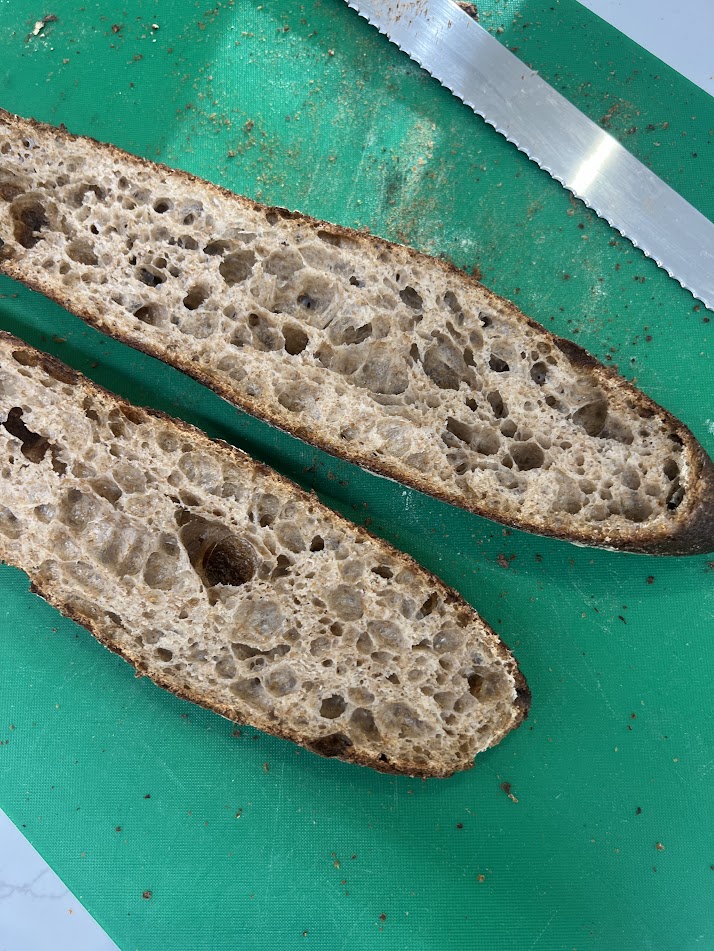
A very interesting thing we did yesterday is our baguette dough had MINISCULE amounts of both dry yeast and sourdough starter. We mixed 70% water, flours, the yeast and the starter, and let it rest for 3 hours! In the mixer. Then we added the salt and additional water. I was surprised that the dough actually rose during that time and when I asked him why he chose to write this formula like this, he said that it helps with the “lift” and it gives the dough a chance to start moving. After adding the water and salt, we did 2 folds and then the dough went right in the fridge. A totally different approach than I’ve ever seen, and it was really cool.
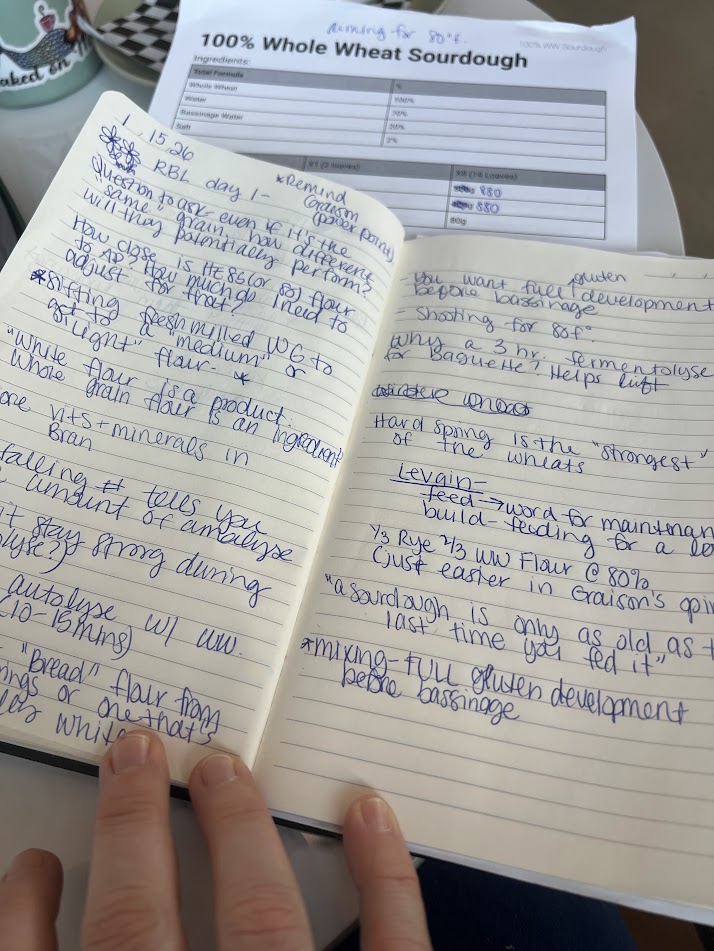
“A sourdough is only as old as the last time you fed it.”-Graison Gill
Graison, like me, thinks it’s super silly when people brag about how old their starter is. The reality is, once you feed it in your space with your flour, it’s now yours, and not 5000 years old.
I hope you got some nuggets of wisdom here! Happy baking, my friends.
Laila