Inclusions, inclusions, inclusions!
Hi Early Risers,
I know I write this a lot but thank you all for taking the time out of your day to be here, support my platform and read my posts.
So, inclusions! I am a bit of a bread purist when it comes to inclusions, mostly because I never know if I want to eat a sweet or savory piece of bread. And if it has a bunch for extra ingredients in it, I don’t get to choose! I typically make plain bread and add the toppings instead of including them in the dough. That being said, I do teach a class at Artisan Baking Center in Petaluma (4 different classes are currently in plans- stay tuned for when we get those up on the website with tickets open!). I am also throwing West Coast Bread Fest there; it’s going to be a blast.
When it comes to adding inclusions to your bread, there aren’t many rules, but the guidelines, in my opinion, are these:
- When adding a wet ingredient, hold back water in your dough. Usually this means fruit, or even vegetables, which might release water into your dough. It can make managing the dough hard, so depending on your comfort level with stickier dough, try holding back 20-30 grams of water when you initially mix your dough.
- The opposite is true for ingredients that absorb dough, like nuts and seeds. I like to give my seeds a 1:1 ratio soak before I mix my dough. I usually do this at the same time that I mix up my starter before mixing my dough, so the seeds/nuts can effectively absorb the water before adding the mixture to the dough.
- Some people like to roast their nuts/seeds before adding it to their dough. For me personally, I don’t do this because I think it takes over the flavor of the grains, but you can choose to do this step if you like. You can either roast them in the oven at 350 for 5-8 minutes or over a low-med heat in a pan on the stove, no oil needed, just in a dry pan.
- There are a few ingredients that will affect the fermentation because of their anti-bacterial/fungal properties, so you have to be careful with:
- Raw garlic (use roasted or garlic powder)
- Cinnamon
- This doesn’t mean you can’t add raw garlic or cinnamon (maybe not together!!) to your dough; I am just pointing this out so you can plan for your bulk fermentation to take significantly longer if these ingredients are added.
- A lot of sugar- so when you add honey, sugar, maple syrup, etc., they will not only add more liquid to the dough, but they will also pull out the water from the dough, making it seem more wet. If it’s just a tiny bit it won’t make a huge difference, but it’s important to know this.
- Anything that is really fatty/oily. When oil coats flour it makes it harder for the yeast to access it and ferment, so it will also slow down bulk fermentation.
So, how much of an inclusion should I add to my dough?
- This is a preference! As I said earlier in this post, I like to let the flavor of the grains shine, and I don’t mind if I have a bite that includes more of the extra ingredients followed by a bite that has less.
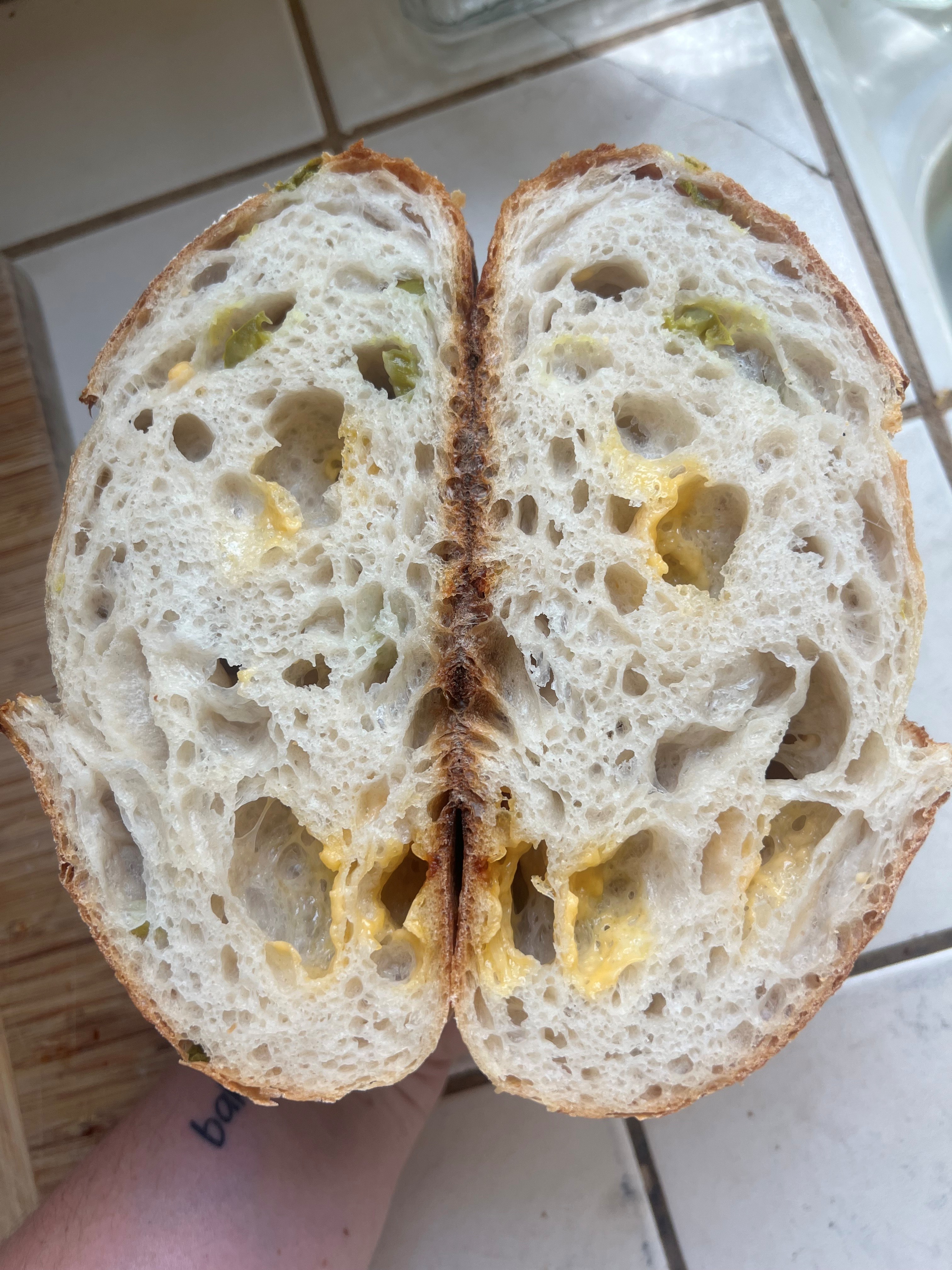
- If you care less about the grains and actual bread part in your inclusion loaf and you just want to eat a really fun and flavorful inclusion loaf, go for it and add more! It will weigh down the dough, and keep in mind that anything chopped very large (especially cheese) will create air bubbles as it cooks and melts. Those air bubbles will be holes in your bread.
- Most people tell you to add about 20% of flour weight of inclusions to your dough but again, I would mess around with this until you get the outcome you are looking for. I like to be somewhere around 15% and keep in mind that herbs and spices pack a huge flavor punch, and you shouldn’t add 15% of those- they weigh like nothing!
When do I add the inclusions?
- Add them during your first fold if you are mixing by hand and make sure to do at least 2 more folds to evenly distribute the rest of the ingredients.
- If you are using a mixer, add them in when the dough is fully developed, smooth and shiny, and you’re ready to stop mixing and transfer it into your bulk fermentation container.
- This is how you get evenly distributed ingredients. Many people complain of their inclusions being just around the perimeter of the bread, around the crust, and that’s usually from adding the inclusions too late in the process and them not getting evenly distributed.
- The one inclusion I like to add late in the process is when you want to make a cinnamon swirl bread. That is tricky, so here are my tips for that:
- Make a mixture of cinnamon, sugar and a bit of flour.
- Brush water, egg wash or milk on your stretched out dough.
- Use dough that is fully bulk fermented.
- Sprinkle the mixture all over the dough but keep a nice border.
- As you shape the loaf, make sure to pinch the seams frequently to trap the cinnamon sugar mixture to prevent leaking.
- Final proof the dough WELL. Do not rush it. Under proofed dough has air pockets and you’ve already introduced air when adding the cinnamon sugar mixture, so be patient with it. I like to make cinnamon swirl loaves in pans, so it doesn’t leak all over my Dutch oven and because I like the shape for this use better.
Okay, can I get some recipes now???
Of course! You can use any base recipe for the dough, but I’ll recommend my Country Loaf recipe. If you’re newer to baking or don’t want to use any whole grains, you can use my Beginner’s version. Here are some fun inclusion ideas that you can add to these base doughs:
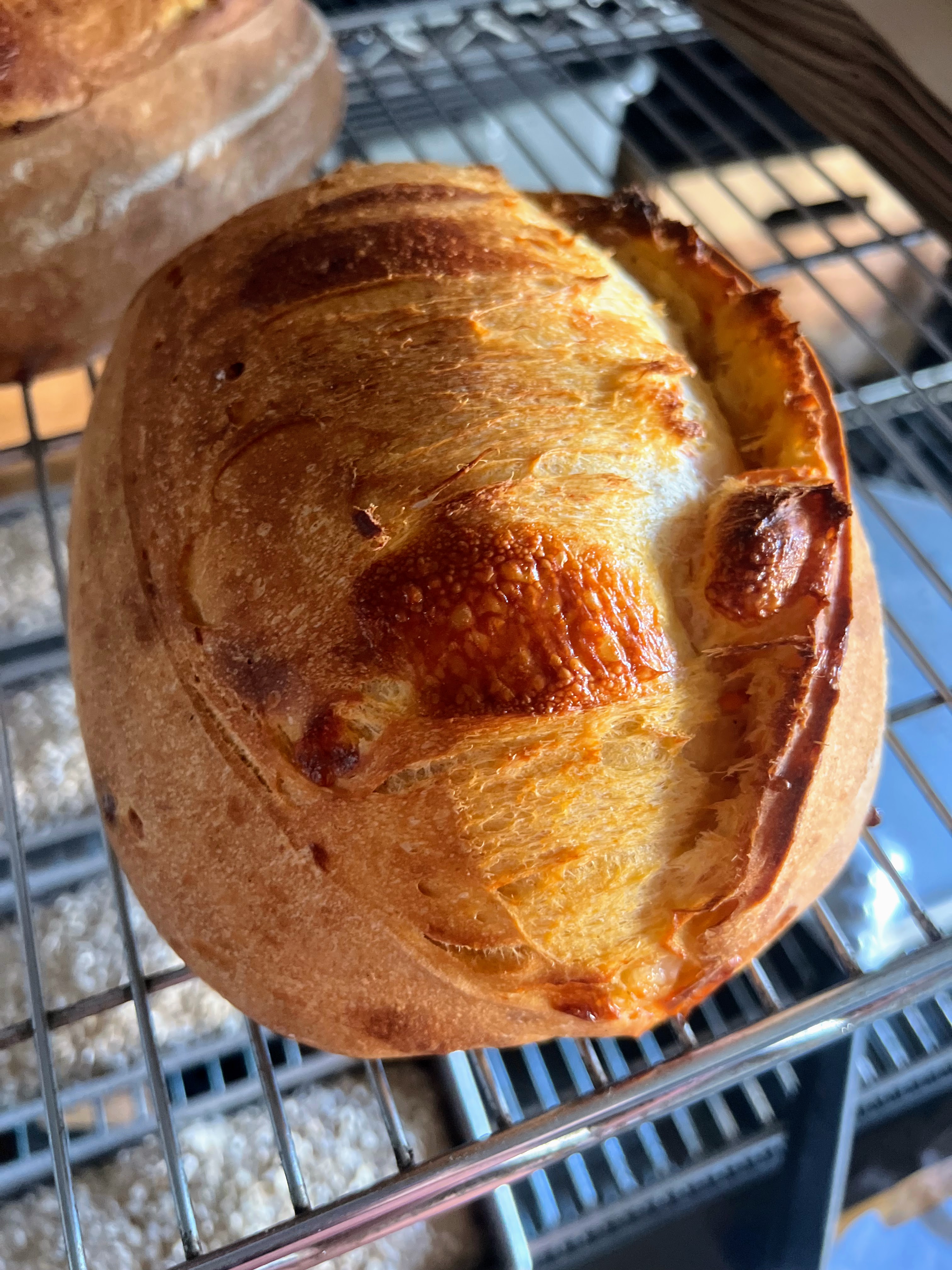
- Cheddar/Jalapeno: 65g cubed cheddar cheese, 15g jalapenos (I prefer pickled and jarred but you can do fresh as well!)
- Olive/Rosemary: 90g rough chopped olives and 2g chopped fresh rosemary. You may want to adjust the rosemary amount if you use dried. I like a variety of olive sizes.
- Walnuts and dried Cranberries: 40g dried roughly chopped cranberries and 80g lightly roasted and chopped walnuts. You can choose to soak these in 120g water before adding to the dough. Keep in mind that the walnuts will react to the acidity of the starter and your bread will have a purple tinge- it’s pretty and don’t worry- it’s normal!
- Seeded Loaf: 80g water and 80g seeds of your choice. Like I mentioned before, if you prefer a deeper seedy flavor, roast/toast them before you soak them. Soak for at least an hour, but best is about 4 hours or even overnight. I like to use this blend from Central Milling, but you can choose any seeds you like.
- It’s also nice to coat the shaped dough in seeds before putting it in the fridge. Just shape, lightly wet the dough by either spraying it with water or rolling it in a wet towel, and then roll it in the seeds of your choice.
- Sweet Potato/Toma: This flavor combination was out of this world! Though I will mention that sweet potatoes, being a starch and soft, will mix into the dough and the dough will be really soft. It’s more of an additional ingredient in your dough rather than an inclusion that will stand out. I added 130g roasted sweet potatoes and 70g cheese, (I was generously gifted the incredible Toma by Point Reyes, which is already a favorite of mine, and that’s what I added. You can add whatever cheese makes you happy!) and the loaf was PACKED with these ingredients.
- Dried strawberry/White chocolate: For Valentine’s Day, I like to make this for my kids, they think it’s so cute and the strawberry adds a nice color. The white chocolate caramelizes a bit and adds sweetness. Add 34g (one pack from Trader Joe’s) dried strawberries and 80g white chocolate.
- Macerated figs, hazelnuts and cardamom: This is a fancy one that I learned at the class I went to a couple of weeks ago. You’d chop 60g fresh figs and mix them with 30g rum and 30g water. Let it soak overnight and add that to your dough along with 60g hazelnuts and 1t cardamom. It’s really aromatic and flavorful!
Please feel free to ask about any other inclusions you’d like to add to your loaves and have fun getting creative! Happy baking, Early Risers!
Laila